New England Aeronautical Institute Catalogue
Academic Year 2025 – 2026
Last Updated September 1, 2025
New England Aeronautical Institute
115 Flightline Road Portsmouth,
NH 03801-6811, USA www.neai.aero
1. Preface
The New England Aeronautical Institute (NEAI or the Institute) is an online institution of higher education that has developed an interdisciplinary approach to aviation programs of study with the ability to compete with other higher education institutions’ traditional aviation programs. As the third decade of the 21st Century begins, long-range strategic thinking is in order to create a level of aviation education that will be widely recognized both in the academy, the air transportation industry, and the general public. Such a strategy need not be narrowly conceived. It should embrace many disciplines and integrate them into a common core of knowledge. This is the aim of the New England Aeronautical Institute. Aviation is always advancing with the types of aircraft that are used, the number of people they will carry, the facilities they will require, the safety, security, and environmental measures that will be necessary to ensure the viability of the industry. The best ways to integrate flight with other modes of transportation are still vigorously debated and researched. Air routes bind the peoples of the world more and more tightly together and people of all nations share in this integration. Air passenger and air cargo travel has expanded greatly with creative ways to address sustainability, safety practices, and management of complex systems. At the same time, strategies to address operational disruptions, such as those brought about by COVID-19, have demonstrated the critical importance of the concepts of Response, Recovery, and Resilience. The introduction of unmanned aerial vehicles (UAVs) the concept of advanced air mobility and the introduction of alternative fuels in flight including electricity are taking front stage and will change the focus, priorities, and potential of the industry. Academic instructional delivery systems can address these and other challenges. NEAI, through the close cooperation of local, regional, and global aviation businesses and organizations and through the creation of a multidisciplinary core of expertise can be at the forefront of teaching, research, and outreach efforts to address these endeavors. NEAI offers one academic program, an undergraduate degree in Aviation (Bachelor of Science in Aviation – BSAV), implementing a cutting-edge curriculum offered through eLearning, that will be forward-thinking, international in scope, interdisciplinary in nature, and addressing the future needs of industry. The curriculum focuses on the integration of flight operations training with academics at the undergraduate level. The United States is the world leader in the field of aviation, and its educational system is highly regarded globally. NEAI seeks to capitalize on these two strengths by taking advantage of a lean, low cost, technologically based, and internationally focused structure that will enable NEAI to serve student markets around the world. Projections of the need for qualified aviation personnel, especially in technical fields, indicate significant shortages in the United States and globally. Our institution, providing transfer-in credit for licensed professionals will be able to assist them both as they start their aviation careers as well as provide a pathway for those already in a stable career to obtain academic credentials. In addition, it is poised to serve those that do not poses those professional credentials but intend to obtain them in the future.
2. The Institute’s History
NEAI has been established in the State of New Hampshire in 2020 having received approval by the Secretary of State and recognition by the Internal Revenue Service as a 501c3 not-for profit institution. Its domain name has been secured under the extension .aero given its aviation focus (www.neai.aero). The Institute’s founders submitted an application to the Division of Educator Support and Higher Education, New Hampshire Department of Education on June 30, 2022 seeking degree granting authority for the Bachelor’s of Science in Aviation program at the undergraduate level. A team composed of expert representatives from New Hampshire academic institutions as well as the Aviation Accreditation Board International (AABI) was appointed by the Division to review the NEAI candidacy. On August 31, 2022 a review of the Institute was conducted in Concord, New Hampshire at the offices of the Division of Educator Support and Higher Education, New Hampshire Department of Education.
3. Charter, Mission, Vision, and Objectives
Our Charter The Charter of New England Aeronautical Institute provides the legal foundation and framework for the institution and grants the Institute the authority to operate and award degrees. The approval and recognition sought from State of New Hampshire agencies and in the future accreditors are intended to assure that the Institute’s programs and their delivery of instruction meet or exceed the rigorous standards of United States and global higher education. New England Aeronautical Institute’s once approved as a degree granting institution, projected within the 2023 calendar year will be regulated and regularly monitored by the Division of Educator Support and Higher Education, New Hampshire Department of Education.
Our Mission
Our Statement of Mission serves as the defining declaration of institutional purpose and direction. It is the lens through which all our initiatives are viewed, instituted, and measured. We cultivate critical thinking skills and life-long learning attitudes through a technology based individualized and interdisciplinary pedagogical approach with an appreciation of globalization and diversity rooted on the needs of the global aviation industry. Our Vision
Our Vision stands as an ideal to which the Institute’s community continuously aspires. Our objective is to purposefully and thoughtfully prioritize and undertake those actions which will bring our Institute ever closer to this ideal. We provide online education of exceptional quality for the next generation of aviation professionals.
Our Objectives
The objectives of the Institute, which apply, as well to the Bachelor of Science in Aviation that it plans to offer will influence in a comprehensive fashion all elements of the NHIA community. It is the commitment of the Institute to: • Provide for its students individualized, technologically advanced, and cutting-edge United States higher education applied to aviation for its students; • Assist its students to engage in professional and personal endeavors that contribute to community and business development; • Cultivate an interdisciplinary, global, aviation focused, and stimulating intellectual environment in which career practices in general and more specifically in aviation are informed by the highest standards of ethical behavior and academic theory; • Instill in students attitudes and skills for lifelong learning and leadership roles in the global economy, and; • Serve as global center of intellectual excellence in aviation where teaching and practice are intertwined.
4. Academic Calendar
For the academic year 2023-2024, the Institute has adopted the following calendar:

5. Admissions
Our institution aims to present a high-quality, low-cost alternative for post-secondary education to aviation industry professionals and aspiring professionals, especially pilots, who do not possess academic credentials at this level. As the academic discourse if fully online, NEAI studies can be easily combined with a student’s professional career. In addition, NEAI provides an opportunity to traditional college age students to combine their professional aviation training and entry into the workforce with a post -secondary degree in a seamless manner.
NEAI admits students of any race, color, national and ethnic origin, gender, sexual orientation, age, religion, physical disability, or veteran status to all the rights, privileges, programs, and activities generally accorded or made available to students at the Institute.
Student applications for admission can be submitted at any time during the year and are processed in the order received. Students are admitted in a rolling admissions manner to the next academic term. Academic terms follow the quarter system and run for 10 weeks and normally begin in October, January, April, and June (Summer Term of 4 weeks) of each year. Courses are offered via the institution’s Virtual Learning Platform.
The Admissions function evaluates applications and support materials for admissions and decides upon the acceptance and placement of students. All application support documentation should consist of either the original documents, appropriately certified electronic copies, or notarized copies. Since the language of instruction and administration is English, documents that are not in English must be accompanied by certified English translations.
Admission decisions are based on prior academic performance, non-academic experience with emphasis in the aviation industry, licensure holdings, involvement in civic engagement activities, and proficiency in the English Language. The following are the minimum requirements for unconditional admission:
> High school Diploma from an accredited high school or its equivalent.
> English Language Proficiency.
Student applicants must submit the following in order to qualify for admission consideration:
> A completed undergraduate admissions application.
> Official Diploma, transcripts, and certificates of all secondary and post-secondary schools attended.
> Evidence of English language proficiency for non-native English speakers
> A short motivation essay.
> Two letters of recommendation.
> A digital head shot photograph.
> A non-refundable application fee of $50.
> A copy of the applicant’s passport/official identity card.
English Proficiency can be demonstrated by one of the following or other appropriate means:
> A high school Diploma and/or transcript from an institution whose language of instruction is English, > including International Baccalaureate Certificate or Diploma.
> General Certificate of Secondary Education Certificate (GCSE).
> International English Language Testing System (IELTS) with a minimum score of 5.5.
> Test of English as a Foreign Language (TOEFL) with a minimum iBT total score of 80.
> Test of English for International Communication (TOEIC) with minimum score of 750.
> University of Michigan Certificate of Competency in English (ECCE).
> University of Cambridge First Certificate in English (FCE).
SAT and ACT scores, though not required for admission, will be important in assisting the Institute with its admission decisions. Applicants must make their own arrangements for the examinations and have the results forwarded to the Institute. An interview is required for every applicant who appears to meet the standards for admission. Interviews will be arranged through the use of technology as a camera on conference call so that the identity of the applicant is verified.
The Institute will reserve the right to make inquiries concerning the accuracy of the information provided in the candidate’s application. Decisions on admission are made in good faith on the basis of information provided by the applicant and their referees. If the Institute discovers at any time that false statements have been made or material information withheld or omitted, it reserves the right to withdraw an offer of admission or to terminate registration.
Under certain circumstances, student applicants who demonstrate strong potential for successful completion of the program, but do not meet all entrance requirements, may be considered for conditional admission. Students admitted in this manner must successfully remove any outstanding conditions within the time period stipulated by the Chief Academic Officer in their admissions letter in order to achieve unconditional status and officially continue in the program.
In addition to degree seeking students, NEAI accepts non-degree students. A non-degree student is one who is not pursuing a degree. Non-degree students are limited to a total of 40 credits and receive a transcript for their academic achievement.
Students transferring from another higher education institution may be eligible to transfer up to 60 credits of undergraduate coursework for courses already successfully completed in another institution with a grade of C or better (2.0 overall Grade Point Average). Students applying for admission to the undergraduate programs may also transfer a complete associate degree. The determination of eligible transfer credit will be made by the Chief Academic Officer of the Institute.
If credits are transferred, only the credit will appear on the student transcript. The grades do not transfer and do not become part of the student's GPA. A minimum of 36 credits (and the last 24 credits) of the degree program must be earned at the New England Aeronautical Institute in order for the student to be awarded an undergraduate baccalaureate degree from the Institute.
Courses may be waived under certain conditions. Waivers may be awarded for prior experiential learning, licensure possession, and/or for credit by examination. Students in the Advanced undergraduate degree of the institution will receive 40 credits as waivers for their Commercial or Air Transport Pilot’s Licence issued by competent governmental authorities (ex. Federal Aviation Administration, European Aviation Safety Agency) upon presentation of the license. A certified copy of the license will become part of the permanent student record.
No more than 50 percent of the credits required for a degree can be awarded as waivers. When credit is awarded on the basis of prior non-collegiate learning alone, student learning and achievement are demonstrated to be at least comparable in breadth, depth, and quality to the results of institutionally provided learning experiences. The faculty assure that there are clear standards for assessment of student competencies in the designated subject areas and that the student’s record will contain the competencies attained and the methods of assessment on the basis of which the credits were awarded.
To keep their good standing, students must maintain a Grade Point Average of 2.0 or better throughout their studies. Those students who fall below a 2.0 are placed on academic probation and, if they are full-time, they must reduce their academic load to part-time. At the same time, they are assigned a personal tutor, who is a member of the faculty, who helps them with academic matters. Students who are not able to pull out of academic probation are subject to dismissal after the third consecutive term of probation.
6. Student Services
Academic support, career support, and psychological counselling services are offered to students who need it through teleconferencing by qualified counselors who are on contract. Appointments can be booked for those services through the Student Portal. The Institute will make every effort to support students with special needs in order to successfully complete their studies and integrate into academic life. Our aim is to ensure equal access to learning to all empowering individuals with special needs in their personal and academic progress. In the case where the special needs have been already identified, prior to admission, the student has the responsibility of providing diagnostic evidence to the Chief Academic Officer. With the student’s informed consent, we will create an appropriate course of action at the recommendation of a licensed counselor. All services that will be provided by Institute will be confidential and subject to the student’s informed consent.
7. Tuition & Fees
Tuition
Students are required to pay their academic term tuition in at the latest by the end of the first week of that term to avoid being dropped automatically. NEAI tuition is 200 $ per credit. A student completing all 120-credit required for graduation will spend 24,000 $ for their undergraduate education. Tuition is subject to change. The cost of books and additional class materials that may be required for each course are not included in the tuition.
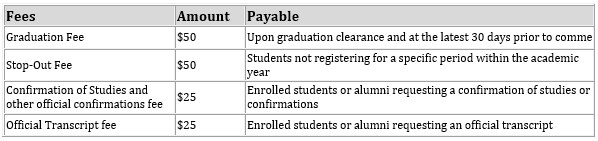
Fees
In addition to tuition, the following fees have been instituted and payable as noted:
8. Financial Assistance & Scholarships
NEAI is committed to helping students with exceptional promise enroll in appropriate academic programs and through academic study and application succeed in their quest to acquire knowledge and competencies that will make a difference in their personal and professional lives. Current and prospective students may apply for Financial Aid and for Scholarships. Students may apply for consideration for work-study support, fellowships, and research assistantships at any time during the academic year directly to the institution’s Chief Financial Officer. Selected students may have up to 50% of tuition waived in exchange for agreed upon work during the academic year. Financial support is awarded to students based on need and takes the form of Student Assistantship. Scholarships (Fellowships and Assistantships) are awarded to students based on academic achievement and special consideration. All financial awards are reviewed periodically and can be suspended or revoked if a student does not maintain academic standing appropriate to the award or does not demonstrate appropriate conduct within the Institute.
9. Academic Information
Academic Credit NEAI fully complies with US federal requirements relating to Title IV of the United States Federal Code vis-a-vis the award of academic credit. The basic unit of credit at NEAI is the semester hour. In a typical 10-week term, each credit awarded corresponds to one contact hour of asynchronous online instruction per week, which is supplemented by a minimum of two hours of appropriate out-of-class activities of appropriate academic rigor commensurable to the level of instruction (primary, intermediate, or advanced) that students receive.
Student Academic Mentoring
Academic mentoring is an integral part of the NEAI experience. It guides students toward the timely completion of their studies as well as the identification and fulfilment of their academic goals. Students who are admitted to the academic programs of NEAI enroll in appropriate courses with counsel from a mentor. While faculty mentors have specific responsibilities, students also play an active part in the advising relationship. They are expected to initiate contact with their mentors, make final decisions about academic matters, and accept responsibility for the consequences of their decisions. The Institute places great emphasis on the development of students’ personal skills. Every student is expected to manage his/her own learning process and to be able to work both independently and as a part of a group.
Course Enrolment
After the student meets with the mentor, through an appointment booked via the Student Portal and receives permission to enrol in courses, the student submits a course registration request to the Registrar. Students are advised to initiate the registration procedure well in advance of the start of class. It is also the student’s responsibility to be aware of registration dates, fee payments and schedule adjustment procedures. This information can be found on the institutional website and in this Catalogue. For full-time students, the typical term course load ranges from 8-12 credits. Students who would like to register for more than 12 credits must consult with their mentor and receive permission by the Chief Academic Officer before their registration is processed.
Add/Drop Policies
Students may add or drop a course(s) without academic or financial penalty in the first week of the term. An Add/Drop form approved by the student mentor must be submitted to the Office of the Registrar via the Student Portal for processing. Once the Add/Drop period ends, a student may not add a course(s). Courses may be dropped up to the 5th week of classes without academic penalty. Courses dropped up to the 5th week of classes are eligible for a 50% refund. Refunds will first be applied to any past-due student balances before being remitted to the student. Students dropping a course after the end of week 5 will receive no refund of fees. Courses dropped before the 5th week of classes will be recorded on the student transcript as having receive a grade of “W”, withdraw. After the 5th week of classes, all students will be awarded a grade for the course.
Course Requirements
General course descriptions can be found in this Catalogue and on the Institute Website. Specific course details and requirements are provided by faculty members to students at the beginning of each course via the course syllabus. The syllabus includes the instructor’s expectations, course description and policies, outcomes to be achieved and assessment procedures, as well as faculty contact details and procedures and deadlines for coursework submissions. Questions and clarifications regarding the course syllabus should be directed to the respective faculty.
Honors
Students who have earned at least 50% of their credits at the NEAI graduate “Summa Cum Laude” if their GPA is 3.90 or above; “Magna Cum Laude” if their GPA is 3.80 to 3.89; and “Cum Laude” if their GPA is 3.70 to 3.79. Honors are recorded on a student’s transcript and diploma when his/her degree is conferred.
Standards of Conduct
Employees and students alike must conduct themselves with the highest personal and professional standards. Discrimination of any kind, bulling, and harassing behavior will not be tolerated. Furthermore, dual relationships presenting conflict of interest situation such as those that may be created by professional relationships outside of the institution between students and instructors are not allowed. The same is true for personal relationships between student and faculty for the duration of a student’s study. Finally, NEAI employees and students are prohibited from engaging in the unlawful manufacture, distribution, dispensation, possession, use or being under the influence of illegal drugs or alcohol while acting in an institute capacity.
Sexual Harassment Policy
It is the policy of NEAI to maintain an environment free of all inappropriate conduct of a sexual nature. Sexual harassment in any form is expressly prohibited. Any individual who engages in any conduct that constitutes sexual harassment or that creates a sexually offensive and/or hostile environment will be subject to appropriate action, up to and including disciplinary action or immediate termination. No adverse action will be taken against any individual who reports allegations of sexual harassment, and all reports will be treated confidentially.
Code of Student Conduct and Ethics
The rules and regulations governing the actions and interactions of administrative personnel, faculty, and students are intended to ensure that the aims and objectives of the New England Aeronautical Institute are accomplished according to the highest standards of academic rigor and ethical behavior. The Institute reserves the right to make changes to its written policies, rules, and regulations at any time.
Distinction between Academic and Non-Academic
Conduct Academic conduct is generally considered to be related to the actions of students that are associated with the teaching-learning environment. Misconduct, may include, but not necessarily be limited to, such things as plagiarism, cheating and falsifying academic records. The section below details the information for the handling of “Academic Misconduct.” Non-academic conduct is generally considered to involve actions of students related to standards of behavior that are established for the purpose of maintaining an acceptable level of propriety within the Institute community. Through appropriate due process procedures, disciplinary action will be taken in response to conduct, which violates these principles.
Academic Misconduct
NHIA students are expected to act in a responsible manner, as expected in a higher education setting, in all activities connected with his or her studies. Instances of cheating, lying, violating courses rules, and copyright infringement, Code of Student Ethics. If it is determined, by an instructor or other appropriate official, that a student has acted unprofessionally, he or she will be subject to disciplinary action. Such action shall include but not be limited to: a failing grade on the work product, a failing grade in the course, or expulsion from the program. The severity of the action shall be determined by the appropriate instructor.
Academic Integrity
Academic integrity and the observation of a strict code of conduct are cornerstones of the educational experience that NEAI intends to provide. Whereas important in all academic settings in shaping future professionals, integrity is a key and non-negotiable element of the professional practice of aviation, a high-risk incident industry that deals with human life.
NEAI students will be expected to act in a responsible manner in all activities connected with their studies. Instances of cheating, lying, violating courses rules, or copyright infringement, violate the Code of Student Ethics. If it is determined, by a member of faculty or other official, that a student has acted unprofessionally, they will be subject to disciplinary action. Such action may include but not be limited to: a failing grade on the work product, a failing grade in the course, or expulsion from the program. The student will always have the right to appeal to the Chief Academic Officer in writing, stating the reason for the appeal.
Plagiarism is a serious academic offence and will not be tolerated. Plagiarism is defined as copying another student’s work, lending work to another student, or representing extracts or whole articles and texts from books, handouts, or parts of websites as one’s own work. Every student is expected to produce their own work product and will be judged on the merit of that product. If it is determined that a student has plagiarized another’s work, they will be subject to disciplinary action. Such action shall include but not be limited to: a failing grade on the work product, a failing grade in the course, or expulsion from the program. The student will always have the right to appeal to the Chief Academic Officer in writing, stating the reason for the appeal.
Students may appeal a faculty member’s decision regarding a grade. To make a formal appeal, a student should communicate to the faculty member, either orally or in written form, the reasons they believe the grade to be unfair or inappropriate. If after that meeting, a disagreement continues to exist, a student may appeal in writing to the Chief Academic Officer.
Student Rights
An Academic Standards Committee exists that consists of a minimum of three faculty members appointed by the Chief Academic Officer who are typically senior members of the faculty and represent the institution broadly. The Academic Standards Committee convenes to monitor the academic progress of all students at least once each year and on an as-needed basis to hear appeals. The Committee recommends the placement of poorly performing students on probation, and issue suspensions and dismissals according to Institute policies.
Disciplinary Appeals
The Academic Standards Committee also considers and adjudicates on matters of disciplinary action. Cases will normally be brought forward by a faculty member. Decisions of the Academic Standards Committee may be appealed to the Chief Academic Officer.
Students may appeal a faculty member’s decision regarding a grade. To make a formal appeal, a student should communicate to the faculty member, either orally or in written form, the reasons he or she believes the grade to be unfair or inappropriate. If after that meeting, a disagreement continues to exist, a student may appeal in writing to the Academic Standing Committee. A meeting may then be arranged.
Cases will be normally brought forward by a faculty member. Decisions of the Academic Standing Committee may be appealed to the Chief Academic Officer. The decision of the Chief Academic Officer will be considered final. All appeals must be made no later than four weeks from the date of the decision of the Academic Standing Committee or four weeks from the distribution of final grades.
Student Records
The New England Aeronautical Institute protects the privacy of student academic records. The Institute will collect information about students for various academic, research and administrative purposes. All personal information will be treated strictly according to the terms of the 2472/97 Data Protection Act. This means that we respect confidentiality in an absolute manner and that all appropriate security measures are taken to prevent unauthorized disclosure of information. Personal information is used for stated purposes only. No health records nor non-academic counselling records will be maintained by the Institute.
A confidential record will be kept of any findings/actions in regard to a violation of the Code of Student Ethics. These records will be used in order determine the appropriateness of the penalty imposed.
Student Records Policy will protect the privacy of student education records. This policy will be consistent with the United States Family Educational Rights and Privacy Act (FERPA) (20 U.S.C. § 1232g; 34 CFR Part 99), however, it does not abrogate any of the requirements of, or rights under, the terms of the 2472/97 Data Protection Act. It gives students certain rights with respect to their education records:
• Students have the right to inspect and review their own education records that are maintained by the Institute.
• Students have the right to request that the Institute correct records, which they believe to be inaccurate or misleading. If the Institute decides not to amend the record, the student then has the right to a formal hearing. After the hearing, if the Institute still decides not to amend the record, the student has the right to place a statement with the record setting forth his or her view about the contested information.
The Institute must have written permission from the student in order to release any information from a student’s education record. However, the Institution may disclose student records, without consent, to the following parties or under the following conditions:
• School officials with legitimate educational interest;
• Other schools to which a student is transferring;
• Specified officials for audit or evaluation purposes;
• Appropriate parties in connection with financial aid to a student;
• Organizations conducting certain studies for or on behalf of the school;
• To comply with a judicial order or lawfully issued subpoena;
• Appropriate officials in cases of health and safety emergencies; and
• Academic accrediting organizations.
All student records exist are kept electronically and are backed up in the Institution’s Cloud based server. There is no physical server that the Institute uses.
Library and Information Resources
EBSCO Academic Search Premier and ebrary e-books collections that support our academic offering in combination with the plethora of open-source academic material available will comprise the key learning and resources for our institution. Facilities and Technologies The New England Aeronautical Institute administrative offices are located at Pease Airforce base in Portsmouth, New Hampshire at 115 Flightline Road. An open-source Learning Management System (LMS) is used for purposes of instructional design and implementation. The LMS enables students to have complete access to several types of content in addition to core academic content. Through the LMS, students are able to access information regarding their courses, the Institute’s activities and any other academic and non-academic issues related to their studies and the Institute.
We use a Microsoft Windows 10 operating system and will run the Microsoft Office 365 Suite to support our technology endeavors. Our email platform will be in the Cloud. Through Microsoft Cloud, email will be accessible from everywhere and every device, while users enjoy other services that MS Office 365 offers, including Office Online Suite, and Teams, which will be used for all virtual communications with students and for administration reasons. MS Office offers OneDrive with 1TB storage space. In addition, we will have a SharePoint intranet in the Cloud as well. Our Intranet is hosted with SharePoint Online as part of the MS Office 365 Suite.
Non-Discrimination
The New England Aeronautical Institute does not discriminate based on race, color, national and ethnic origin, gender, sexual orientation, age, religion, physical disability, or veteran status in the administration of all its educational policies as above described and, in their entirety, including admissions.
9. Academic Program Goals
The Bachelor of Science in Aviation (BSAV) is designed to prepare those that would like to pursue entry level careers in the aviation industry for workforce entry, equipping them with essential skills and knowledge needed for this endeavor. It is also an appropriate degree for those professionals already in the industry, in operational roles, that lack academic credentials at the Bachelor’s level. The initial specialization of the degree is in flight operations.
The program aids its graduates to effectively develop the competencies they need towards their aviation careers by teaching them about industry best practices at the global level and instilling them analytical skills. The program facilitates graduates to develop lifelong learning habits, which enable them to deal with change both within the local and international aviation operational and business environments. Graduates of the program gain a thorough understanding about local and international aviation operations and management.
Emphasizing the strong focus of effective and efficient operations in tightly regulated, complex and demanding aviation business environments, the BSAV curriculum is designed to create the aviation leaders of tomorrow who will engage in industry endeavours. As part of the curriculum, we encourage students to interact and exchange experiences with their professors and expert business professionals who will teach the program.
Each course has been developed by a subject matter expert, observing a standardized format designed for online academic discourse. Instructors will use this particular format in delivering the course. In developing our curriculum, we spoke to global industry experts and also explored published undergraduate degree curriculum, admissions and program requirements of both state and private institutions in the United States and globally regarding similar degrees offered in the country.
Objectives
BSAV, deeply rooted in the objectives of the institution itself, aims to:
• Provide individualized, technologically advanced, and cutting-edge education in the operational and managerial aspects of the global aviation industry;
• Cultivate an interdisciplinary and globally focused pedagogical approach based on systems thinking in understanding and solving aviation problems based on the highest standards of sustainability-based thinking, ethical behavior, and academic theory always considering the safety and security of aviation as their highest priorities;
• Enhance the ability of students to engage in actions that contribute to their communities through their roles as individuals and aviation professionals with understanding of community needs, issues, and priorities;
• Instill in students attitudes and skills for effective communication, lifelong learning and leadership as members of the global aviation economy.
Outcomes
At the conclusion of the BSAV students will be able to:
• Analyze and understand current issues in aviation;
• Implement effectively management strategies in addressing issues in aviation within and outside of their organization;
• Act in various ways with a civic engagement mindset to support community endeavors;
• Stay informed about, appreciate new developments, communicate effectively and lead change in their professional fields.
The program’s curriculum is broken down in three parts: a. General Education (10 courses, 40 credits); Aviation Major (10 courses, 40 credits); Aviation Specialization – Flight Operations (10 courses, 40 credits). In addition to credited courses, each part of the program contains a non-credit professional development experience, designed to support the unit’s learning objectives.
The professional development experiences of the academic program will lead the beginning of each academic year (General Education – year 1, Aviation Major – year 2 – Aviation Specialization – year 3) in creating a common frame of reference for the students to toward the attainment of the unit’s goals and supporting the institutional mission and academic program objectives. The academic plan for the BSAV broken down in its three key parts, General Education, Aviation Major, and Aviation Specialization, is as follows (credits are depicted next to the title of each course).
Structure
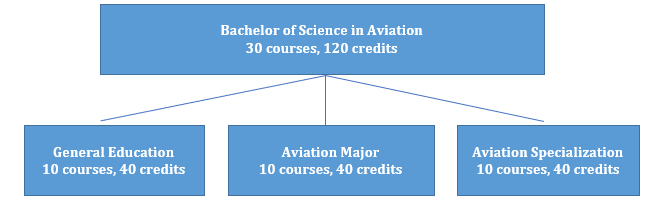
The following tables depict the structure of the academic program, including course codes, titles, credits, and prerequisites.
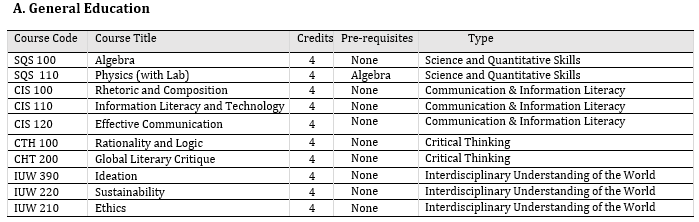
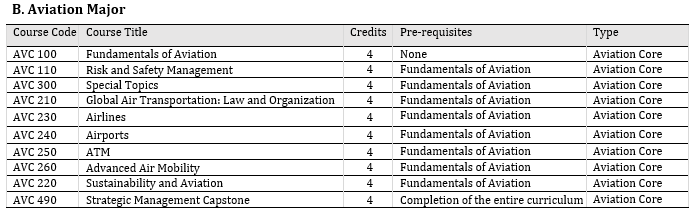
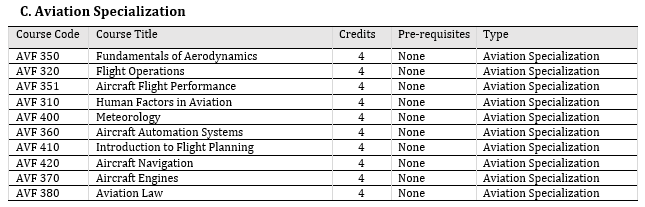
A. General Education - 40 credits, 80 ECTS (600 hours)
In order to assure that all NEAI students have higher education level competency in the essential areas of critical thinking, bibliographic and digital research, writing, oral communication, quantitative literacy, and a broad liberal arts basis for understanding themselves and the evolving social and natural environment, they must successfully complete 40 credits of general education.
General Education Program Goals
The General Education Program aims to:
• Develop in students understanding of human cultures and the natural and physical world, including social sciences, science and mathematics, and humanities;
• Support students in developing intellectual and practical skills, including writing, inquiry, quantitative and information literacy, teamwork and problem solving and lifelong learning skills;
• Cultivate in students individual and social responsibilities, including civic knowledge, appreciation of sustainable development, intercultural competence, and ethical action;
• Aid students in embracing integrative learning, including the capacity to adapt knowledge, skills, and responsibilities to new settings and questions.
General Education Learning Outcomes
Through its General Education Program, the Institute encourages its students to:
• Reflect on their personal values and the role of these values in influencing behavior and decision-making.
• Acquire an understanding of, and a tolerance for, diverse perspectives in problem-solving.
• Develop an intercultural mind-set that will enable an appreciation of the cultural movements that have contributed to societies and their values.
• Appreciate the arts and humanities that express, inspire and continually challenge societal values.
• Promote the sustainable development of the planet through an understanding of the individual as a unit that interacts with an evolving social, business, and natural environment.
• Serve society by developing a sense of community and civic engagement that effects change.
• Develop a historical view of knowledge that allows one to make sense of the past and its relationship to the present and the future.
• Think critically and creatively, to adapt to and proactively effect change in professional and social environments.
• Develop effective writing skills strengthening expository and professional writing abilities.
• Communicate effectively and persuasively through the development of public speaking skills.
• Hone quantitative skills for analytical and critical reasoning. • Develop a better understanding of, appreciation of, and increase their skills repertoire with respect to information literacy and technology.
• Integrate what is learned across disciplines with co-curricular activities that contribute to lifelong personal, professional, and community interests.
Professional Development Seminar
Instructional Technology for Effective Online Learning-0
A one week practical orientation and immersion in the technology used in the pedagogy of the ASAV program, including policies and best practices.
1. Science and Quantitative Skills
SQS 100: Algebra-4
This course focuses on the study and applications of polynomial rational radical exponential and logarithmic functions and systems of equations using matrices. Additional topics such as sequences series probability and conics are included.
SQS 110: Physics (with Lab)-4
This course provides a non-calculus introduction to the topics of motion (kinematics) and forces (dynamics), conservation of energy and momentum, fluid statics and fluid dynamics. The nature of science and physics, including measurements, units, accuracy and precision are explored.
2. Communication & Information Literacy
CIS 100: Rhetoric and Composition-4
This course focuses on ways to approach and examine subjects from an academic perspective and how to communicate findings in writing in a well-structured, ethical, and grammatically sound manner.
CIS 110: Information Literacy and Technology-4
This course cultivates the ability to find, evaluate, interpret, and use information legally, ethically, and effectively. It provides a broad overview of information literacy concepts, including cyber literacy, the knowledge-creation process, finding and evaluating sources, critical reading, and writing with sources as well as introduction to working with digital tools for improving workflow efficiency.
CIS 120: Effective Communication-4
This course supports students in developing the skills required to communicate effectively in a variety of public speaking venues, utilizing nonverbal as well as verbal skills. Focus is placed on the critical assessment of information both on a verbal and research level and recognition of the importance of self-concept in oral communication.
3. Critical Thinking
CTH 100: Rationality and Logic-4
This course explores central aspects of modern formal logic, beginning with an explanation of what constitutes good reasoning. Topics include validity and soundness of arguments, formal derivations, truth-functions, and translations to and from a formal language.
CTH 200: Global Literary Critique-4
Focusing on works that consider the experience of the wider world as their theme, this course explores the varied artistic modes in which great writers, historically, have situated themselves in the world, helping us to understand the deep roots of today's intertwined global cultures.
4. Interdisciplinary Understanding of the World (civic engagement modules)
IUW 210: Ethics-4
This course explores current concerns and trends in ethics with a focus on theoretical frameworks, employee responsibility, diversity, and environmental issues toward cultivating an appreciation for major global ethics issues and their application in professional practice.
IUW 220: Sustainability-4
This course introduces sustainability and focuses on key knowledge areas of sustainability theory and practice, including population, ecosystems, global change, energy, agriculture, water, environmental economics and policy, ethics, and cultural history.
IUW 390: Ideation-4
This course unravels the ideation process which leads to product, service or business model development. Using hands-on learning the course interplays the fundamentals of innovation along with the perspectives of artists, marketers, and business practitioners who shape novel concepts into successful ventures. The Interdisciplinary Understanding of the World is designated as a civic engagement module as, civic engagement actions comprise part of the deliverables of the curriculum.
B. Aviation Major - 40 credits, 80 ECTS (600 hours)
Professional Development Seminar Systems Thinking-0
A one week practical orientation and immersion in systems and networks theory and application in the global aviation industry. This experience aims toward developing an understanding of the manner that the components of the aviation curriculum are interconnected leading to an appreciation of how the aviation system works.
AVC 100: Fundamentals of Aviation-4
This course provides a well-rounded academic foundation in aviation and flight. It covers the history of aviation as well as the basic principles of aviation operations. Students next learn about the infrastructure supporting aviation, such as airports, airlines, manufacturers and air navigation services providers and explore careers in each field as well as certifications and life-long learning opportunities.
AVC 110: Risk and Safety Management-4
This course examines various aspects of aviation flight and ground safety program management from a risk assessment and risk management perspectives. Aviation safety program development, aviation accident causation models, Safety Management Systems (SMS) and other areas relevant to aviation risk management are discussed.
AVC 210: Global Air Transportation: Law and Organization-4
This course covers the fundamental aspects of the management of airlines, air navigation service providers and airports as well as the development of air law including international and national regulatory functions, rights and liabilities of aviators and operators. It also provides a study of international conventions, agreements, and associations such as the ICAO, IATA, and ACI focusing on an examination of the global aviation priorities.
AVC 220: Sustainability and Aviation-4
This interdisciplinary course focuses on the economic, environmental, and social aspects of the management of aviation businesses to achieve their corporate objectives. It explores the prospects that technology and policy can provide in making air travel sustainable.
AVC 230: Airlines-4
This course analyzes the economic, financial, and administrative factors involved in air transport operations from an airline perspective. Emphasis is placed on sustainability practices, ground operations systems, marketing, demand analysis, pricing, route structure, fleet planning and financing.
AVC 240: Airports-4
This course analyzes the economic and managerial factors involved in air transport operations from an airport perspective. Emphasis is placed on ownership models, sustainability, planning, management, ground operations systems, marketing, demand analysis and business development, pricing, and financing.
AVC 250: Air Traffic Management-4
This course analyzes the economic and managerial factors involved in air transport operations from an air navigation systems perspective. Emphasis is placed on regulations and procedures, ownership models, sustainability, planning, management, safety, demand analysis and pricing.
AVC 260: Advanced Air Mobility-4
This course provides an introduction to technologies linked to advance air mobility, including Unmanned Aircraft Systems, through an integrated approach focusing on the way in which various engineering disciplines affect the design, development and deployment of advanced air mobility systems. It concludes with an exploration of future opportunities and challenges for advanced air mobility.
AVC 300: Special Topics in Aviation-4
This course explores topics of interest and relevance in aviation operations and management that are not included in the curriculum.
AVC 490: Strategic Management Capstone-4
This culminating experience in aviation exposes students to problems and situations that will be intellectually stimulating, require the application of their knowledge, values, skills, and technical competence to current problems in the aviation industry acquired throughout the program.
C. Aviation Specialization - 40 credits, 80 ECTS (600 hours)
Professional Development Seminar Professionalism in Aviation-0
A one-week practical orientation and immersion in the preparation for entry into the aviation workforce including job search strategies, interviewing techniques, and syllabus writing.
AVF 310: Human Factors in Aviation-4
This course explores the human factor in commercial aviation. It covers the history of man in flight and the evolution of his role as an operational unit of the aircraft. Students will learn about the basic physiological and psychological characteristics of humans.
AVF 320: Flight Operations-4
This course covers the basic procedures of flight and ground operations in normal and emergency modes. Students will learn about how the infrastructure supporting aviation, such as airports, airlines, manufacturers and air navigation service providers plays a role in flight operations.
AVF 350: Fundamentals of Aerodynamics-4
This course explores the fundamental principles of fluid dynamics and aerodynamics. It covers the basic physical principles of lift and drag forces. Students will also learn about the dominant types of airfoils in aviation and how they behave under specific conditions.
AVF 351: Aircraft Flight Performance-4
This course focuses on the parameters that affect aircraft performance and safety. It covers the basics of flight and fuel performance of modern aircrafts. Students will learn how the performance can be maximized with a minimum cost.
AVF 360: Aircraft Automation Systems-4
This course addresses automation systems used in modern airliners. It covers the basics of aircraft inertial navigation and auto guiding systems. Students will learn how automation is used in modern aviation and what are the limitations of its use.
AVF 370: Aircraft Engines-4
This course focuses on aircraft engines and powerplants used today in aviation. It covers engine operations theory from an aerodynamics and thermodynamics perspectives and modern developments in aircraft powerplant engineering.
AVF 380: Aviation Law-4
This course provides a well-rounded academic foundation of the basic rules and regulations that govern aviation today. It covers the historical background of how the current regulation framework came to be and the current situation today regarding aviation law and regulations.
AVF 400: Meteorology-4
This course covers the academic foundations of Meteorology applied to aviation operations. It explores the basics of weather forecast and weather phenomena as well as weather forecasting. Students will learn how Earth’s atmosphere can affect the safety of the flight.
AVF 410: Introduction to Flight Planning-4
This course addresses the procedures followed in flight planning. It covers the basics of route and fuel planning of flights, and the inflight management procedures. By the end of this course students will have a solid understanding of the procedures modern airlines follow when performing the route and fuel planning of a flight.
AVF 420: Aircraft Navigation-4
This course provides an overview of how modern aircraft manage to navigate their planned course reaching their intended destination. It covers the historical background of aircraft navigation and how this evolved to the modern automated navigation systems to this day.
To keep the curriculum simple and aid students with advancing in the curriculum given the start-up nature of the institution we have not added elective courses as options other than a course on Special Topics in Aviation (AVC 300). This course’s topical coverage will vary according to student interest and to address current issues that confront the industry that are not covered in the curriculum. As the institution develops and matures and more majors, potentially, are added in creating meaningful and manageable academic experiences, then elective courses will be considered.
11. Academic Plan and Course Schedule
The following table presents a typical academic plan – course schedule for the BSAV over the 2 1/3 years it takes for program completion for those students who attend the program full time and have received credit for their Commercial Pilot’s License (Advanced), having submitted the appropriate credentials:
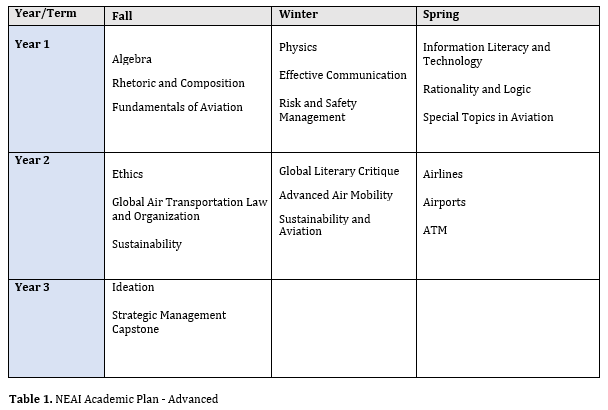
The following table is a typical schedule for the BSAV over the 3 1/3 years it takes for program completion for those students who attend the program full time and have not received prior academic credit:
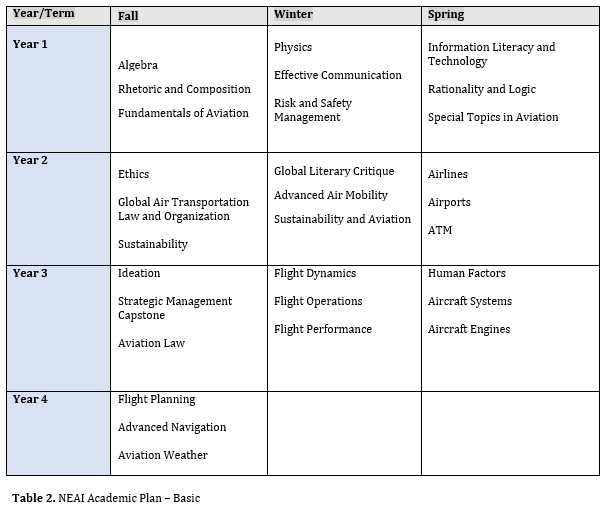
12. Special Courses
We deploy, when appropriate, special course structures in focusing on student individual needs in supporting their successful progression in the academic program. They are, Directed Studies and Independent Studies.
A directed study may be given for a course in the curriculum taught individually (or in a small tutorial group). Directed Studies comply with United States Federal requirements in regard to the award of Academic Credit in regard to rigor as the same learning outcomes with regular courses are achieved. Directed studies are offered when students are unable to graduate in a timely manner because the course they need for that purpose is not scheduled in time to meet their needs; when the number of students registered in a class does not meet the required minimum number of registrations to run as a regularly scheduled class; and other circumstances as determined by the Chief Academic Officer.
In addition to Directed Studies, Independent Studies are also possible. An independent study is the study, on a tutorial basis, of a topic not covered in course offerings. With the approval of the Chief Academic Officer, the student and faculty member agree upon the subject, but the responsibility for developing and completing the independent study lies primarily with the student. No more than eight credits toward graduation can be earned as independent studies.
There will be an allowance at the Institute for students who wish to attend scheduled classes but not earn credits. This may occur on a space available basis with the permission of the instructor and approval of the Chief Academic Officer. The instructor determines whether the potential auditor is appropriately prepared for the course in question and whether the potential auditor can attend the course without to the regular students enrolled. The audit fee will be 50 percent of the tuition charged to those who attend for credit during that term.
13. Assessment
Learning outcomes are assessed by a combination of formal examinations, written assignments, individual and group projects, case analysis and classroom discussions – this depends on the competencies to be attained in the course and the assessment procedures most relevant to those competencies. Formal examinations are administered in most courses to assess understanding of the subject matter as well as broad educational excellence in critical thought, oral and written communications, quantitative skills, and ethical reasoning. Given that the institution is online, only open book examinations will be allowed in an effort to safeguard academic integrity in the best manner possible.
Criteria used in the formal assessment process may be all or some of the following:
• Critical thinking: the ability to critically and creatively analyse is considered highly important for students who aim at obtaining professional positions;
• Relevance: students must be able to produce relevant work in a suitable format;
• Integration of the subject material: students are expected to relate a number of real-life situations to what they have been taught in their degree program.
For the purpose of communicating the level of performance achieved by students the following grading system will be used (Letter Grade, GPA Points, Percentage, Performance Rating):
A = 4.0 = 93 – 100 % = Distinguished
A- = 3.7 = 90 – 92 % = Excellent
B+ = 3.5 = 88 – 89 % = Strong
B = 3.0 = 83 – 87 % = Good
B- = 2.7 = 80 – 82 % = Above Average
C+ = 2.5 = 78 – 79 % = Slightly Above Average
C = 2.0 = 73 – 77 % = Average
C- = 1.7 = 70 – 72 % = Below Average
D = 1.0 = 60 – 69 % = Just Passing
F = 0.0 = 0 - 59 % = Failing
W = Withdrawn from course with no grade recorded
I = Incomplete
P = Pass (for auditors)
E = No Pass (for auditors)
14. Graduation Requirements
Students in order to obtain the BSAV must complete 120 credits (240 ECTS), including transfer credits awarded for prior achievement, with an average of C or better (2.0 Grade Point Average). Students must pay a graduation fee of 50$ that covers the administrative cost of graduation and the diploma.
Students on continuous good academic standing and assuming a full-time status will graduate in two and a half years if they are in the advanced program (commercial pilot qualified candidates) or three and a half years if they are in the regular program (non-commercial pilot credentialed candidates). Part time students on continuous good academic standing will graduate in five years in the advanced program or seven years in the regular program.
Students facing extenuating circumstances and require to suspend their studies (leave of absence) for a period of up to one year can do so by submitting an official request for approval by the chief Academic Officer. Students requesting a leave of absence should be in good standing. Students on academic probation can petition but may be required to reach good standing before approval is granted to them. A leave of absence may be approved for up to one-year during the entire duration of the student’s program. Students cannot exceed the requested leave of absence period. A maximum of 2 leave of absences may be approved before additional coursework or requirements may be imposed on a student.
Students who do not attend any classes for a one-year period, and who have not been granted a leave of absence, will lose their continuing status and will need to reapply for admission to the Institute. If a student is re‑admitted they will need to follow the catalog in effect at the time of their readmission.
Students requesting to withdraw must submit a request regarding their decision to drop out to the Chief Academic Officer. Students, who have not been enrolled for two consecutive terms and have not been granted a leave of absence or fail to register upon expiration of their leave of absence will be notified and will be administratively withdrawn from their respective programs.
Students who have withdrawn and wish to return will need to contact Admissions to re-apply. If a student is re-admitted, they will need to follow the Catalog in effect at the time of their re-admission.
15. Faculty
Our faculty are academically qualified most with terminal degrees in their discipline as well as significant teaching, research, practical, and (for those needed) aviation experience. Our key priority in assembling our faculty team was ensuring that they possessed, in addition to a forward thinking and student-centered worldview vis-à-vis education, a combination of academic and applied practice credentials as well as for the aviation portion of the program, aviation experience. This was done to best serve our mission. In addition, our faculty cadre possesses international experience that reflects the current needs and future trajectory regarding academic and aviation industry development as well as familiarity and experience in distance learning technologies and pedagogy. The alphabetical list of our current faculty members including their primary assignment is as follows:
Alexandra Asche has worked in the corporate finance industry for 10+ years. She holds an MBA from the University of Bedfordshire/UK and a Ship Finance Manager from the Frankfurt School of Finance. Being originally from Hamburg in Germany, she started to work at a ship financing bank. In 2013 she moved to the Corporate Banking team of private bank Berenberg in London and later to Frankfurt and Amsterdam to join Deka Bank and ING Bank. In 2018, she got the opportunity to join Global Jet Capital and change her focus in asset class to business jets. As Sales Director for Europe, she has been setting up Global Jet Capitals’ Swiss representative office and is sourcing and structuring leasing and financing solutions in Continental Europe for Global Jet Capitals’ portfolio.
Georgios Balogiannis holds a bachelor’s degree in physics and a master’s degree in Astrophysics, Astronomy and Mechanics from the National and Kapodistrian University of Athens. In 2020 was awarded a PhD degree in biomedical optics and biophysics from the National Technical University of Athens. Author and co-author of a several journal papers in a range of scientific fields, including biomedical engineering, biomedical optics, and general physics. Currently holding the position of Chief Theoretical Knowledge Instructor (CTKI) at Global Aviation S.A.
Nicholas Bertozzi holds B.S. and M.S. degrees in mechanical engineering from Northeastern University. Over the past 42 years, he has taught a wide variety of engineering, math, and physics courses at Northeastern University, Daniel Webster College and Worcester Polytechnic Institute, where he is currently a faculty member in the robotics engineering department. Mr. Bertozzi had the privilege of serving as dean of the School of Engineering and Computer Science at DWC from 2009-2015 where, with the help of his colleagues, implemented ABET-accredited programs in aeronautical engineering and mechanical engineering.
Triant Flouris holds degrees from the UofSC (Ph.D.), Baylor University (M.A.), and William Jewell College (B.A.). Dr. Flouris has extensive international experience in strategic planning and higher education administration in the U.S., Canada, and Greece. He is the author of nine books, and over two hundred refereed journal articles, book chapters, scholarly articles, and public reports primarily on aviation topics. He holds professional pilot and flight instructor certifications and has over 10,000 hours of total flight time. At NEAI he is President - CEO and professor of aviation.
Vassilis Karapetsas has a Bachelor’s of Arts Degree in Communication from The American College of Greece and a Master's Degree in Integrated Marketing and Public Relations from Emerson College. Currently, he is a Ph.D. candidate at Oxford Brookes University in the UK and has received a Certified Trainer diploma from the Ecole Hotelier de Lausanne in Switzerland. Mr. Karapetsas has more than twenty years of experience as a journalist, a senior consultant, a Communication - Management lecturer, and a senior academic and administrator in institutions of higher education. At NEAI he is visiting professor in the General Education Program.
Kallia Lempidaki holds degrees from the Aristotle University of Thessaloniki (Ph.D.) and the University of Crete (M.A. and B.A.). Dr Lempidaki conducted postdoctoral research at the University of Hamburg (2016) and the National and Kapodistrian University of Athens (Department of History and Archaeology, 2018–2021). She worked as a research assistant at the University of Crete (2003, 2005), the National Hellenic Research Foundation (2005–2008), and the Institute for Advanced Study (School of Historical Studies/Princeton, 2017–2021). She has published a monograph and a series of articles on legal history. Her current research focuses on the juridical aspects of Ancient Greek and Latin inscriptions, social and cultural history, identity, and commemorative practices.
Raafat George Saadé has a Ph.D. from Concordia University and a Natural Sciences and Engineering Research Council of Canada fellowship from McGill University, Montreal, Canada. After 21 years at Concordia University, he joined the Beijing Institute of Technology (BIT) in Beijing, China, at the rank of Chair Full Professor. Since 1995, he has accumulated extensive consulting experience in four dot-com startup projects and in international projects funded by the Canadian International Development Agency and the International Civil Aviation Organization. Raafat is multidisciplinary and has published in top-ranked journals such as Sustainability, Journal of Air Transport Management, Journal of Organizational Change Management, Administrative Sciences, Internet of Things, Information and Management, Computers in Human Behavior, and Expert Systems with Applications. He is a founding member, vice president (research), and Chair of Artificial Intelligence in Aviation committee, of the International Association for Green Aviation (IAGA).
John Slater holds a B.A. in Environmental Studies and Chemistry from Alfred University in Alfred, New York, and a M.S. and Ph.D. in Geochemical Systems from the University of New Hampshire in Durham, New Hampshire (NH). Dr. Slater was a NASA Earth System Science Fellow from 1999-2002 and has published several peer-reviewed scientific papers on atmospheric chemistry, atmospheric remote sensing, glacial ice and snow chemistry, and radiative climate forcing. Additionally, he is a member of the NH Envirothon Advisory Committee (environmental science academic competition for North American high school students) and a co-author of NH’s Environmental Literacy Plan. He is the owner of Energy Vision Homes, LLC, which specializes in building custom high-performance homes.
Lynnette Sorrentini holds degrees from Liberty University (DBA), Wilmington University (MS), and the University of Puerto Rico, RUM (BS). Dr. Sorrentini has vast experience in talent acquisition and building pipeline programs, employee relations, leadership development, and diversity and inclusion. Lynnette is a Certified Professional in Talent Development (CPTD) through the Association for Talent Development. She holds the Society for Human Resource Management (SHRM) certification as a SHRM-CP. In addition, she has a Diversity, Equity, and Inclusion in the Workplace Certificate from the USF Office of Corporate Training and Professional Education.
Thomas Teller is a 45-year veteran of the aviation industry with experience as a military officer, university faculty member, and researcher, having served in the past as a Chief Academic Officer of a higher education institution in the State of New Hampshire (Daniel Webster College). He has recently retired as a member of the research staff of the MIT Lincoln lab where he was involved in the Federal Aviation Administration’s NextGen project.
16. Board of Directors
A strong and diverse Board of Directors has been assembled to manage and govern NEAI. These include prominent academics, business leaders, and political leaders primarily from the United States, and particularly New Hampshire, as well as internationally, reflecting the global vision of the institution, with significant background in Aviation. The current composition of the Board is as follows:
Chair
George Antoniadis (2028) is the Founder, President and CEO of PlaneSense, Inc. Founded in 1995, PlaneSense is one of the three industry leaders in the aircraft fractional ownership space globally. Antoniadis earned a master’s degree in electrical engineering from the Federal Institute of Technology Zurich (ETH), and an M.B.A. with distinction from Harvard Business School. Before starting PlaneSense, Antoniadis was a management consultant at McKinsey & Company, Inc. He is the Chair of the International Board of Trustees of Athens College. He holds an Air Transport Pilot license and is an Advisor to the Aero Club of New England.
Members
Nicholas Bertozzi (2028) holds B.S. and M.S. degrees in mechanical engineering from Northeastern University. Over the past 42 years, he has taught a wide variety of engineering, math, and physics courses at Northeastern University, Daniel Webster College and Worcester Polytechnic Institute, where he is currently a faculty member in the robotics engineering department. Mr. Bertozzi had the privilege of serving as dean of the School of Engineering and Computer Science at DWC from 2009-2015 where, with the help of his colleagues, implemented ABET-accredited programs in aeronautical engineering and mechanical engineering.
Constantinos Coutifaris (2026) is an assistant professor of management at the McCombs School of Business of the University of Texas at Austin and an academic Advisory Board Member of the Berkeley Culture Initiative. His research on organizational culture and leadership has been published in top academic journals, including the Academy of Management Journal and Organization Science, as well as featured in practitioner outlets such as TED and Apple podcasts, Harvard Business Review, and popular books like Adam Grant's Think Again. Prior to joining academia, Dr. Coutifaris spent eight years in the financial services industry, most recently leading the turnarounds of industrial organizations. He received his Ph.D. in organizational behavior and MBA from the Wharton School of the University of Pennsylvania and his B.A. in economics and philosophy from Haverford College.
Triant Flouris (2028) holds degrees from the UofSC (Ph.D.), Baylor University (M.A.), and William Jewell College (B.A.). Dr. Flouris has extensive international experience in strategic planning and higher education administration in the U.S., Canada, and Greece. He is the author of nine books, and over two hundred refereed journal articles, book chapters, scholarly articles, and public reports primarily on aviation topics. He holds professional pilot and flight instructor certifications and has over 10,000 hours of total flight time. At NEAI he is Managing Director - CEO and professor of aviation.
Wendy Hyatt (2028) holds degrees from The University of St. Thomas (B.A.), Merrimack College (M.A.), UMass Lowell (M.A. Cert.) Wendy serves at the AD of Experiential learning and Special Program at UMass Lowell. Wendy has extensive career development experience with diverse students and groups at multiple higher education institutions, including UMass Lowell, MIT, and Boston College. Wendy has created award-winning programs and educational materials designed to transform, enrich and guide students.
Wayne Jones (2028) earned his B.S. from St. Michael’s College and Ph.D. in inorganic chemistry from UNC Chapel Hill. Following post-doctoral work at the University of Texas at Austin he joined the chemistry faculty at SUNY Binghamton serving in numerous leadership roles for 24 years including founding director of the Center for Learning and Teaching and interim dean of Harpur College of Arts and Sciences. He moved to the University of New Hampshire in 2017 to serve as Dean of Engineering and Physical Sciences, becoming Provost and VPAA in 2018. An award winning researcher and teacher in inorganic and materials chemistry, he has been recognized as a fellow of the American Chemical Society (2010), a member of the National Academy of Inventors (2020), and currently serves on the ACS Board of Directors.
Sevket Numanoglu (2027) is Chief Technology Officer of Gozen Holdings. Sevket is currently responsible with technological transformation of the holding companies and is also CEO of Gozen Digital Aviation. In previous assignments, Sevket was Jeppesen’s Vice President of Managed Services responsible with Flight Operation Services, MITAC Services, Aviation Training Services, Procedure Design&Simulation, Product Execution, User Design, Best Practices Integration, and Enterprise Processes Services. Numanoglu holds a Mechanical Engineering degree, an MS in Engineering and Technology Management and a MS in Political Science. He is a PMP and is certified Six Sigma Black Belt.
Mandar Pendsé (2027) is Chief Information Officer of PlaneSense, a leading fractional aircraft ownership program company headquartered in Portsmouth, NH where he leads company’s information technology and digital innovation agenda. Mandar brings with him over 30 years of information technology and professional services experience focused on delivering innovative solutions across multiple industries. He joined PlaneSense from Oracle where was a Senior Partner focused on Travel, Transportation, Logistics and Service Industries. In addition to bringing deep operational and leadership experience in Information Technology & Services to PlaneSense operations, Mandar also brings a lifelong passion for aviation as a private pilot since 1994.
John Slater (2028) holds a B.A. in Environmental Studies and Chemistry from Alfred University in Alfred, New York, and a M.S. and Ph.D. in Geochemical Systems from the University of New Hampshire in Durham, New Hampshire (NH). Dr. Slater was a NASA Earth System Science Fellow from 1999-2002 and has published several peer-reviewed scientific papers on atmospheric chemistry, atmospheric remote sensing, glacial ice and snow chemistry, and radiative climate forcing. Additionally, he is a member of the NH Envirothon Advisory Committee (environmental science academic competition for North American high school students) and a co-author of NH’s Environmental Literacy Plan. He is the owner of Energy Vision Homes, LLC, which specializes in building custom high-performance homes.
Donna Soucy (2026) has represented District 18 in the New Hampshire Senate for five consecutive terms. She was elected unanimously as Senate President on December 5, 2018. Donna Soucy has a long history of public service, having been first elected to the New Hampshire House of Representatives in 1990. In addition, she served two terms as an Alderman representing Ward 6 in the City of Manchester and she most recently served the people of Ward 6 as a member of the Board of School Committee for seven years. She also has the distinction of being the first female chair of the Manchester Fire Commission. A lawyer, having practiced in both the public and private sector, Soucy also served as the Senate Chief of Staff from 2006 to 2010. Senator Soucy earned her Bachelor of Arts in Politics from Saint Anselm College, and Juris Doctor from Franklin Pierce Law School (now UNH Law School).
Alexandros Tsaktanis (2028) holds a bachelor’s degree in Management and Systems and a master’s degree in Investment Management from Bayes Business School (CASS Business School) of City University London. Mr. Tsaktanis has had positions in management consulting with LRDP Ltd and investment banking with UBS in London prior to joining Global Aviation SA in 2007. Since then he has served as Business Development Manager and Managing Director of the Athens-based aviation academy, responsible for financial strategy and international projects.
Petros Tsaktanis (2027) graduated from the American College of Athens, and then attended Kinston University in UK, studying Economics and Management. Mr. Tsaktanis held managerial positions in retail and hospitality industry prior to joining Global Aviation SA in 2006. Since then, he has served as Accountable Manager and later as Board President and Managing Director until today. He is very accustomed with European Aviation Safety Agency’s legislation and collaborates with the Hellenic Civil Aviation Authority in many legislative workshops regarding flight training safety promotion, operational management of flight schools, and effective oversight measures of Approved Flight Organizations (ATOs).
Thomas Teller (2028) is a 45-year veteran of the aviation industry with experience as a military officer, university faculty member, and researcher, having served in the past as a Chief Academic Officer of a higher education institution in the State of New Hampshire (Daniel Webster College). He has recently retired as a member of the research staff of the MIT Lincoln lab where he was involved in the Federal Aviation Administration’s NextGen project.
17. Executive Administration
The following senior officers comprise the Institute’s cabinet:
Triant Flouris: The President serves as the Chief Executive Officer (CEO) for NEAI with overall responsibility for the institution. The President provides leadership and oversight for all aspects of the Institute, including academics, finance, planning, student affairs, enrolment, and advancement. As the Chief Executive Officer, the President has principal responsibility for the planning, development, implementation, assessment, and improvement of all programs and policies. In addition, the president is the key liaison with regulatory authorities in New Hampshire and the United States as well as with accrediting authorities. The President reports to the Board of Directors and works with the Board and its Chair in establishing policies to guide the institution. Triant Flouris has 25 years of experience as an academic, researcher, administrator and executive administrator (as Chief Academic Officer) in aviation and non-aviation positions in higher education, in the United States, Canada, and Greece.
John Slater: The Executive Vice President and Chief Operating Officer (EVP) oversees and directs the Institute’s administration and finance functions, ensuring internal operations run smoothly and efficiently according to institutional standards and regulations. The EVP sets goals and guidelines, establishes and manages operational procedures, manages technology, manages the budgets and costs, reviews and evaluates financial reports, and implements the Institute's policies and standards. Finally, the EVP manages the external relations of the institution with key service providers such as legal, information technology, and accounting. The EVP reports to the President. John Slater has 30 years of experience as a faculty member, administrator and executive administrator in higher education having served both as Associate Dean and Dean in New Hampshire higher education institutions (Daniel Webster College and Southern New Hampshire University respectively).
Raafat George Saadé: The Vice President Academic Affairs and Chief Academic Officer (CAO) serves as the chief administrator for the Institute’s academic affairs providing leadership and guidance between the academic and student affairs creating an integrated student experience. As a strategic leader, the CAO guides in the academic direction of the Institute and fosters a cohesive managerial approach across all academic units, admissions, enrollment management, library, and administrative support units keeping the institutional mission as an integral part of its overall intellectual commitment to teaching excellence and research. The CAO reports to the President. Raafat Saadé after 21 years at Concordia University, he joined the Beijing Institute of Technology (BIT) in Beijing, China, at the rank of Chair Full Professor. Since 1995, he has accumulated extensive consulting experience in four dot-com startup projects and in international projects funded by the Canadian International Development Agency and the International Civil Aviation Organization.
Mandar Pendsé: The Vice President Technology and Chief Technology Officer (CTO) is responsible for the Institute’s technology strategy, infrastructure, and innovation, focusing on how technology can achieve organizational strategic goals. In addition, the CTO oversees technical operations and digital transformation and supervises the management of internal information systems and daily IT operations. The CTO reports to the President. Mandar Pendsé is Chief Information Officer of PlaneSense, a leading fractional aircraft ownership program company headquartered in Portsmouth, NH where he leads company’s information technology and digital innovation agenda. Mandar brings with him over 30 years of information technology and professional services experience focused on delivering innovative solutions across multiple industries.